


About The Department
About the Department
Department of Visual Communication was established in the year 2019.Department is well equipped with state of art infrastructure. The facilities include Drawing Studio, Photography Lab, Shooting Floor, Audio Video Screening Room, Computer Graphics Lab, Edit Suite and Sound Studio. Drawing studio is furnished with individual Drawing tables, Focus Light and Still Life Materials. Photography Lab has Digital SLR Cameras with Tripod and Lights which matches with that of the industry. Audio Video Screening Room has extraordinary facilities. Computer Graphics Lab has high end Computers with software installed, enables the students to practice in terms of designing and also in post production.
The department offers B.Sc Visual Communication for the passionate creative and innovative budding media professionals to groom them as versatile professionals. The syllabus throws light on Drawing and Painting, Graphic Design, Basic Photography, Advertising Photography, Computer Graphics, Web Designing, Audio Video Production, Television Production, Communication Skills, Elements of Film and Film Making.Department also offers media related Certificate Courses on Art Appreciation, Water Colour Painting, Landscape Painting, Photoshop and Basic Photography.
Head of the Department
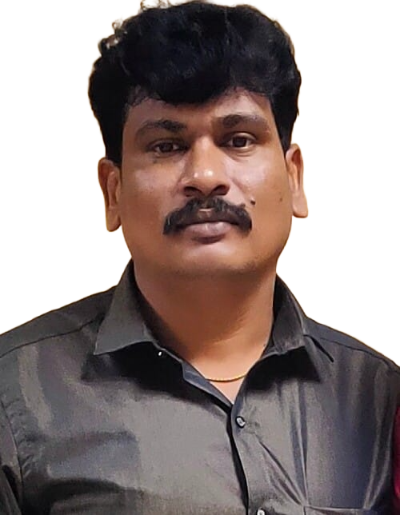
Mr. Muralidharan. K M.A., M.Phil., PhD(Persuing)
Assistant Professor and Head
Department of Visual Communication
BOS MEMBERS
| S.NO | NAME | DESIGNATION | MEMBER |
| 1 | Mr.Muralidharan. K | Assistant Professor and Head Department of Visual Communication SPIHER, AVADI -600054, Chennai | Chairman |
| 2 | Dr. B.Senthil Kumar | Research Supervisor and Assistant Professor School of Mass Communication Vels Institute of Science, Technology & Advance studies(VISTAS) Pallavaram Chennai | External Member - Assistant Professor |
| 3 | Dr. Arun Gourav Ram | Associate Professor and Head Department of Visual communication Faculty of Arts and Science, Bharat Deemed University, Selaiyur, Chennai | External Member – Associate Professor |
B.Sc. – Visual Communication
Regulations –2023
(Effective from the Academic Year 2020-2023)
1. Eligibility for Admission:
Candidates who have successfully completed to have a pass in Higher Secondary Examinations of 12 years duration conducted by Tamilnadu Government or a recognized examinations equivalent thereof with one subject in are eligible for admission to Four Year Undergraduate Programmes in B.Sc Visual Communication.
2. Duration of the Programme:
The undergraduate programmes are of either 3 or 4-year duration, with multiple entry and exit points and re-entry options with appropriate certifications such as:
(a) UG certificate after completing one-year (two semesters) of study in the chosen fields of study,
(b) UG diploma after completing two-years (four semesters) of study in the chosen main fields study,
(c) Bachelor's degree after a three-year (six semesters) programme of study in the single major subject,
(d) four-year bachelor's degree (honours) after eight semesters programme of study. If a student completes a rigorous research project in their major area of study in the fourth year of a bachelor's degree, he/she is awarded bachelor's degree (honours with research).
3. The operative period of this Regulations 2023:
This Regulations 2023 is operative from the academic year 2023-2024 with three years grace period for the students to appear for the arrear examinations after the duration three/four year UG programme of study.
4. Medium of Instructions:
The medium of Instructions and examinations is English for non-language courses.
5. Credit System:
The programme consists of prescribed courses of study for a pass. The workload for a course of study is measured in terms of working hours in the time table for a semester of 90 working days. A credit is a unit by which the course work is measured. It determines the number of hours of instruction per week over the duration of a semester with a minimum of 15 weeks. Each course of study may have only a lecture component or a lecture and tutorial component or a lecture and practical component or a lecture, tutorial and practical component, or only practical component. One-credit lecture course in a semester means a one-hour lecture per week in a15 week duration, which is equivalent to 15 hours of teaching. A one-credit course in practical means two hour practical per week, which is equivalent to 30 hours of practical work.
6. Major Discipline:
An undergraduate degree programme in a major discipline is to have 50% of total credits in its core courses.
7. UG Certificate:
UG certificate is awarded if a student exits after completion of first year with 40 credits (20+20 credits in 1st & 2nd semesters) in addition to 4-credit vocational course in the first year summer vacation. The certificate holders can re-enter the degree programme along with the batch of students studying in the Regulations 2023 in the appropriate semester.
8. UG Diploma:
UG diploma is awarded if a student exits after completion of second year with 80 credits (40+20+20 credits in the first year & 3rd and 4th semesters) in addition to completing one vocational course of 4-credits during the summer vacation of 2nd year. The diploma holders are allowed to re-enter in the 3rd year of the degree programme along with the batch of students studying in the Regulations 2023 in the appropriate semester.
9. Three-Year UG Degree:
Students who wish to undergo a 3-year UG programme for award of UG Degree in the Major discipline after successful completion of three years, securing 120 credits(40+40+20+20 credits in the first year and second year & 5th and 6th semesters) satisfying the minimum credits as detailed below:
(i). Major(core) - 60 credits.
(ii). Minor stream - 24 credits.
(iii). Multidisciplinary - 09 credits.
(iv). Ability Enhancement Courses(AEC) - 08 credits.
(v). Skill Enhancement Courses (SEC) - 09 credits.
(vi). Value Added Courses common for all UG - 06 to 08 credits.
(vii). Summer Internship - 02 to 04 credits.
Total - 120 credits.
10. Four- Year UG Degree (Honours):
Four-Year UG degree (Honours) is awarded if a student completes it in the major discipline with 160 credits (40+40+40+20+20 credits in the first year, second year, third year & 7th and 8th semesters) and satisfying credits requirements as detailed below:
(i). Major (Core) - 80 credits.
(ii). Minor Stream - 32 credits
(iii). Multidisciplinary - 09 credits.
iv). Ability Enhancement Courses (AEC) - 08 credits.
(v). Skill Enhancement Courses (SEC) - 09 credits.
(vi). Value Added Courses common for all UG - 06 to 08 credits.
(vii). Summer Internship - 02 to 04 credits.
(viii). Research Project/ Dissertation - 12 credits.
Total - 160 credits.
Note: Honours students’ not undergoing research will do 3 courses for 12 credits in lieu of a research project/dissertation.
11. Four-Year UG Degree (Honours with Research):
Research streams can be chosen by the students who secure 75% marks and above in the first six semesters. They can do a research project/dissertation under the guidance of a faculty member. UG Degree (Honours with Research) is awarded to those students who secure 160 credits including 12 credits from research) dissertation.
12. Weightage for Continuous Internal Assessment (CIA) and End Assessment (EA):
The weightage for Continuous Internal Assessment (CIA) and End Assessment (EA) in terms of marks in each course of study is 40 and 60 respectively.
12. (a) Attendance:
The overall attendance required by the students is 75% of the working days in a semester. Exemption on approved medical leave for the students is 10% of the working days in a sem
13. SCHEME OF COURSES AND EXAMINATIONS:
14. Pass Marks:
The pass marks in each course of study is 40% in the end assignment (i e., 24 out of 60 marks) and the minimum of 40% in the continuous internal assessment and end assessment taken together (i.e., 40 out of 40+60=100 marks).
15. Grading System:
The pass marks in all the prescribed courses that account for the total credits as eligible for the award of degree, are converted into grades and grade points for the purpose of calculating Cumulative Grade Point Average (CGPA) by referring to the following table on grade conversion from marks:
O Grade 10 points (95-100marks)
A+ Grade 9 points (90-94 marks)
A Grade 8 points (80-89 marks)
B+ Grade 7 points (70-79 marks)
B Grade 6 points (60-69 marks)
C Grade 5 points (50-59 marks)
D Grade (pass) 4 points (40-49 marks)
Fail - (0-39 marks)
16. Classification of Successful Candidates:
The successful candidates who are eligible for the award of degree are classified to have passed in First Class if secured CGPA of 7.00 and above and all other successful candidates are classified to have passed in Second Class.
17. Arrear Examinations:
Candidates with arrear examinations are permitted to proceed to complete the duration of the programme with eligibility to reappear for the arrear examinations on registration within seven years from the date of joining the first year programme. The grade sheets shall not carry failed courses.
18. Pattern of the Question Paper for End Examinations:
The question papers for end examinations are set for the maximum of 100 marks and the software for processing assessment of candidates' performances in the examinations will reduce the marks secured by the candidates to 60%.
19. Scheme for Continuous Internal Assessment (CIA):
The teaching departments which offer the courses of study decide the scheme of continuous internal assessment in consultation with the faculties in charge of the courses of study. The marks for CIA are calculated for a maximum of 40 marks.
20. Procedures for Calculation of Cumulative Grade Point Average (CGPA):
| Cumulative Grade Point Average (CGPA) = Sum of Weighted Grade Points Total Credits = ∑ (CA+EA) C ∑C Where Weighted Grade Points in each Course = Grade Points (CA+EA) multiplied by Credits =(CA+EA)C Weighted Cumulative Percentage of Marks(WCPM) = CGPAx10 |
C- Credit, CIA-Continuous Assessment, EA- End Assessment
Facilities
LAB FACILITIES
Visual Communication lab consists of all required infrastructure for UG and PG practicals. Department has separate Editing lab and sound studio. The following softwares were available for the purpose of both students practical as well as for their projects.
Good camera facilities in photography and Videography is available.


Vision & Mission
Vision
- To identify the creative talents and teach them the nuances of media focusing on different genres.
- To identify the individual talents and extend support to achieve greater heights.
- To nurture the students to actively participate in the academic and extra-curricular activities to serve the media industry effectively.
- To train the students as socially responsible media professionals.
Mission
- To impart quality education, without compromising in the standards.
- To develop visual thinking, conceptual thinking and effective communication skills.
- To ensure hands on experience on the recent trends in the industry and increase employability.
- To transform student into one of the best media professional.
The curriculum focuses on both Theory and Practical subjects. The combination of theory and practical subjects enables the students to apply the theories and concepts practically and further allows them to experiment and explore. The hands on experience they gain from the experienced Faculty members and Media Professionals helps the students to grow as professionals in the field of media and entertainment industry. Screening of International and Regional films of different genres, followed by interactive session allows the students to open up on film language. Department organizes Guest Lectures, Field Trips, Seminars and Webinars to interact with the media professionals. The forum bridges the gap between the academic and industry. Field Trips to Monuments and Production houses enable the students to get exposed to the environment and to understand the current scenario. Art Camps and Workshops are conducted for the students to bring out their creative talents and to throw light on aesthetics and its application. Students are encouraged to participate in the various Drawing and Painting Competitions, Photography and Short film Competitions organized by various Institutions and organizations. Student’s Drawing, Painting and Photographs are exhibited regularly in the virtual gallery. It appears as Photo-feature, drawing viewer’s attention and keeps engaging. As part of curriculum students are encouraged to undergo internship in the different facets of media industry. Students are allowed to take up In-house production work and also extension activities pertaining to the curriculum.
PROGRAMOUTCOMES (POS):
Graduates will be able to:
- PO1: Apply the knowledge of Drawing and Graphic Design skills in creating Designs and creating pre production works in creative field.
- PO2: Knowledge of Introduction of Human Communication skills, types of communication and others forms of communication enables them perform well in the working space and also as eligible and successful professionals.
- PO3: Create Designs using different computer aided software’s. Knowledge of scalar and vector image designs, Designs for print advertisement creates job opportunities in print field and other promotional organizations.
- PO4: Apply the knowledge gained in handing photography, analogue and digital imagery, the composition and colour correction and image manipulation with the help of Photoshop enable them to serve the media industry and also as entrepreneurs in establishing their own photo studio.
- PO5: Apply the knowledge of Communication skills in work place and to serve the industry with broad knowledge of current trends.
- PO6: Knowledge about the Art and Aesthetics and popular works allows students to critically analyze and approach any given work holistically. Ability to learn different perspective of aesthetics.
- PO7: Knowledge of Sociology in the context of Political Science learns to serve the urbanization and importance of rural society. Knowledge of Familiarize with the basic concepts like Liberty, Equality, Right and Law.
- PO8: Knowledge of environment, the need to maintain it and its importance, serves as inspiration to the creative field and also to serve the society.
- PO9: Able to work in teams and also to serve the industry as individual photographs, cinematographers, film editors and graphic designers.
- PO10: Apply knowledge gained in Television production in script writing, story development, storyboard filming and editing throw opportunities in pre production and post production in the television and film industry.
- PO11: Knowledge of Different types of media, mass media and new media allows them to serve different facets of the industry. Knowledge of 3D animation, serves to work in the game industry, in advertising and entertainment and infotainment industry.
- PO12: Serve as fully fledged media professional will all the necessary skills, knowing the ethics, duties and responsibility.
PROGRAM EDUCATIONAL OBJECTIVES (PEOS)
- PEO1: To enable graduates to shine in the creative field as individual professional and freelance artists and also as entrepreneurs.
- PEO2: To provide students with strong foundational concepts in the field of visual art, advanced techniques in all the fields related to visual communication and equip them with necessary skills to meet out the needs of the industry.
- PEO3: To prepare students to critically analyze the prevailing situation and to enlighten them on the nuances of different fields and train them in all the genres
PROGRAM SPECIFIC OUTCOMES (PSOS)
- PSO1: To analyze and develop the skills necessary in communication, visual communication, designing for the media industry.
- PSO2: To adapt the emerging trends in communication and technology and to work parallel with the media industry.
- PSO3: To understand the concepts of Aesthetics and Philosophy of beauty. To develop an understanding of the elements of Art and Principles of composition.
- PSO4: To learn the various theories of origin of state.
- PSO5: Gain knowledge in design principles and skills to real – world graphic design.