


About The Department
Department of Electronics and Communication Engineering
About the Department
- Electronics and Communication Engineering (ECE) is a swiftly advancing field, with new ideas emerging every year. The department offers Undergraduate (UG), Post Graduate (PG), and Ph.D degree programs that provide students with the knowledge and tools they need to succeed in the Electronics and Communication Engineering.
- The ECE Department is one of the strongest department in the campus and stands high in its objectives and outcomes.
- The Department has well equipped laboratories, library,e-classroom and qualified staff members.
- Research in the department focuses on high-impact various disciplines: Communication systems, Wireless networks, Signal and Image Processing, RF MEMS and MIC, Microwave antennas, Optical communication and Photonics, VLSI technologies.
- The ECE department prepares students for careers in this constantly evolving discipline, pursue leadership, technical and management positions in a variety of industries.
- Campus interviews are conducted every year by leading software and hardware companies. Several of our students are placed in national and multinational companies like Infosys, Polaris, Cognizant, Verizon, Nokia, HCL etc. Some are pursuing their higher studies in prestigious institutions in India and abroad.
Head of the Department

| S.No | Name & Designation | Member |
| 1 | Dr. G.P. Ramesh Professor & Head | Chairman |
| 2 | Dr. M.Ram Pradheep Professor | Internal Member |
| 3 | Mr.P.Britto Corthis Associate Professor | Internal Member |
| 4 | Mr.P.Subramanian Associate Professor | Internal Member |
| 5 | Ms.T.Anne Ramya Assistant Professor | Internal Member |
| 6 | Ms. R. Gomathi Assistant Professor | Internal Member |
| 7 | Ms.R.Nirmala Assistant Professor | Internal Member |
| 8 | Dr. N.R. Shanker CEO ( Chase Technologies) | Industry Expert |
| 9 | Dr. V.Nagaraju Professor (Saveetha Institute of Medical and Technical Sciences) | Academic Expert |
| 10 | Mr.Rudra Bhanu Satpathy Founder & CEO, IFERP | Alumni |
PROGRAMMES OFFERED
B.E. ECE
B.E. ECE with specialization in VLSI
B.E. ECE with specialization in RF &Wireless Communication System
B.E. ECE with specialization in Embedded System & IOT System
B.E. ECE with specialization in Signal Processing
M.E. Communication Systems
Ph.D (Full Time and Part Time
REGULATIONS AND SYLLABI UNDER CHOICE BASED CREDIT
SYSTEM & OUTCOME BASED EDUCATION
UNDER GRADUATE PROGRAMMES
POST GRADUATE PROGRAMMES
Regulation 2021
Ph.D. – Electronics & Communication Engineering
Activities
MOU:
Department of ECE has signed MOUs with the following companies:
- MOU has been signed with Chase Technologies on 12th September 2017 for the benefits of research programmes and Research Scholars with the collaboration of Research and Development Units
- MOU has been signed with Pantech Prolabs India Pvt . Ltd. Technologies on 14th July 2017 for the benefits of research programmes and Research Scholars with the collaboration of Research and Development Units.
- MOU has been signed with Vee Eee Technologies on 19th January 2017 for the benefits of research programmes with the collaboration of Research and Development Units.
- MOU has been signed with National Institute of wind Energy on 15th June 2015 for the benefits of research programmes and Research Scholars with the collaboration of Autonomous government R&D Institution under MNRE.
- MOU has been signed with Waveguide Technologies on 19th February 2015 for the benefits of research programmes and Research Scholars with the collaboration of Research and Development Units.
- MOU has been signed with Chase Technologies on 9th August 2014 for the benefits of research programmes and Research Scholars with the collaboration of Research and Development Units.
- MOU has been signed with Pantech Prolabs India Pvt . Ltd. Technologies on 10th April 2014 for the benefits of research programmes and Research Scholars with the collaboration of Research and Development Units
- MOU has been signed with CMC Academy Pvt. Ltd. on 6th February 2014 for the benefits of Training for students and Faculty.
MOU has been signed with Vee Eee Technologies on 16th December 2013 for the benefits of research programmes with the collaboration of Research and Development Units.
IE(I) Students Chapter
Inauguration of IE(I) Students Chapter
St.Peter's Institute of Higher Education and Research, Avadi, Chennai-54, has Inaugurated IE(I) students Chapter by Electronic and Communication Engineering on 2nd August in the University Campus. Chief Guest Dr. Ramesh, MIE Joint Secretary, Tiruvallur Local Centre, The Institution of Engineers(India). Dr. Francis C. Peter VC., Registrar and IE(I) Co-ordinator Dr.G.P.Ramesh, MIE motivate all the students to actively participate and organize events in the college for the benefits of students. Since it is a platform to interact with industry and Academic Research Scholar person it is vital part to have in our Organization. Enthusiastic participation by students and staff will make this chapter successful. And brief interaction by our Chief guest Dr. Ramesh, MIE about IE(I) and their benefits. Students of Secretary, Treasurer, and Event Manager etc.., of SPHIER have taken Oath. Read More...
Events
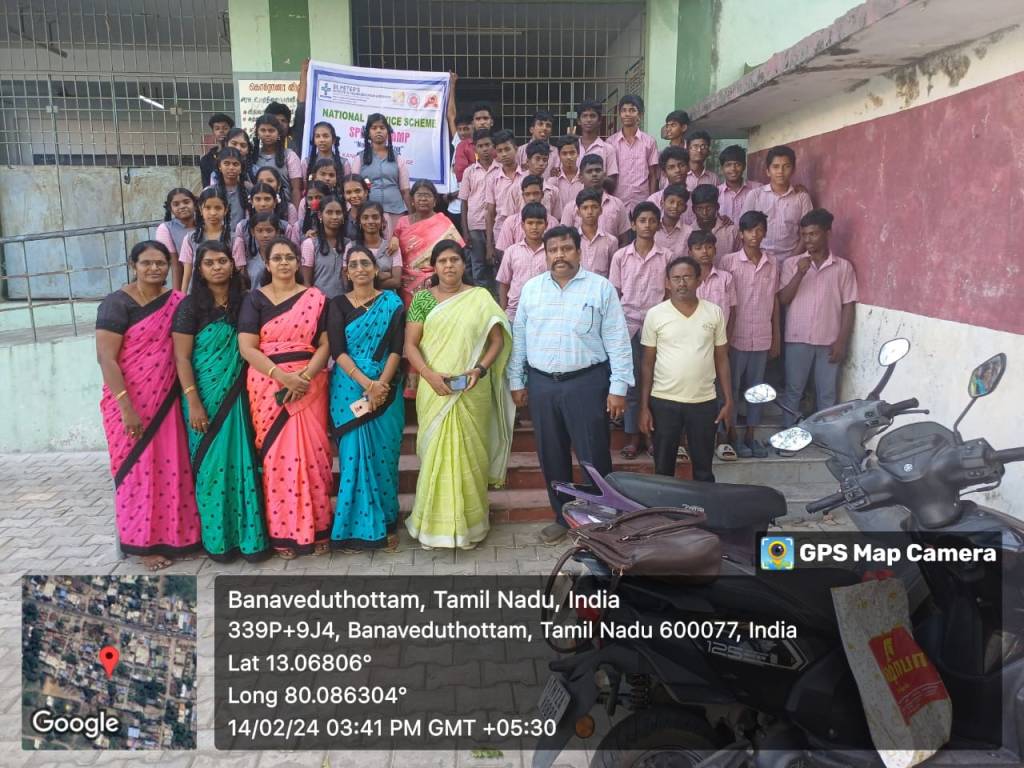
Workshop on Electronics Mastery 14th February,2024

Workshop on design and development of Prototype in Linkage with Innovation Ambassadors 12th February,2024

Guest Lecture on FINFET Technology improvements- 31 th January, 2024
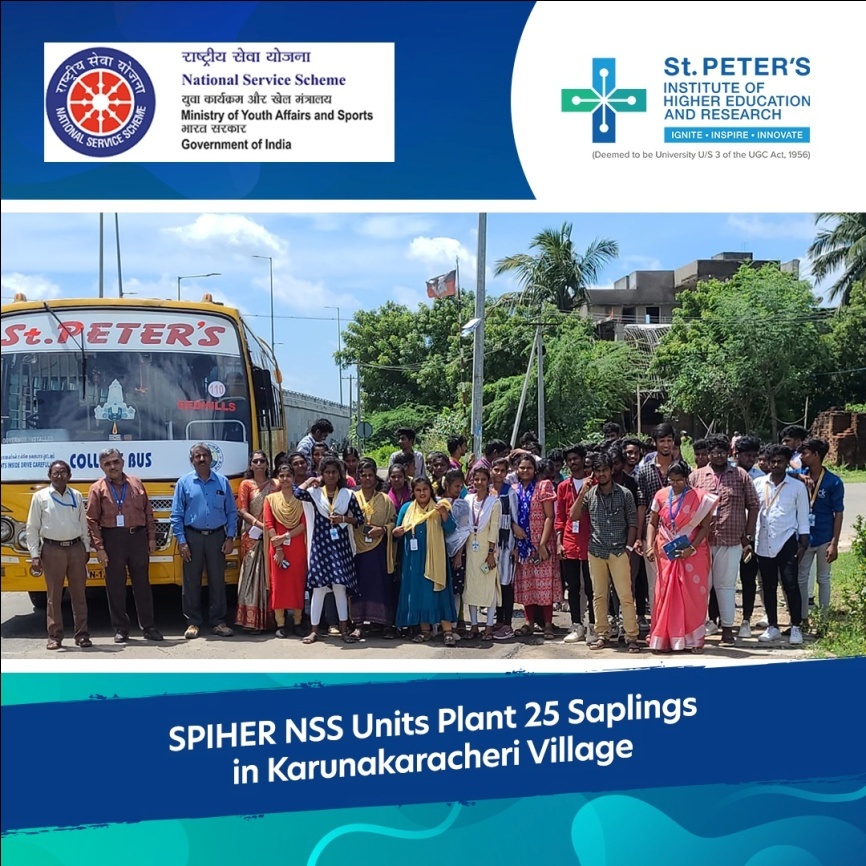
MeriMati MeraDesh- My Soil My Country
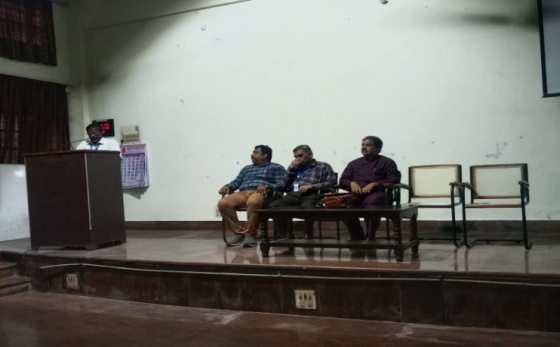
One Day Entrepreneurship Awareness Camp
25th August 2023
CENTER OF EXCELLENCE


Facilities

Advanced Embedded system lab

Analog & Digital System Lab and Microprocessor & Microcontroller
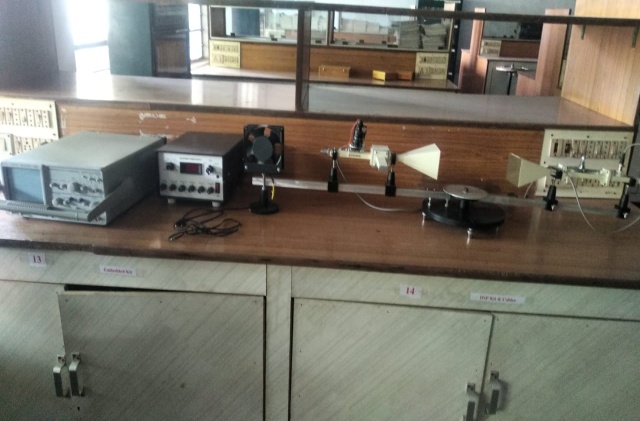
Optical & Microwave Lab
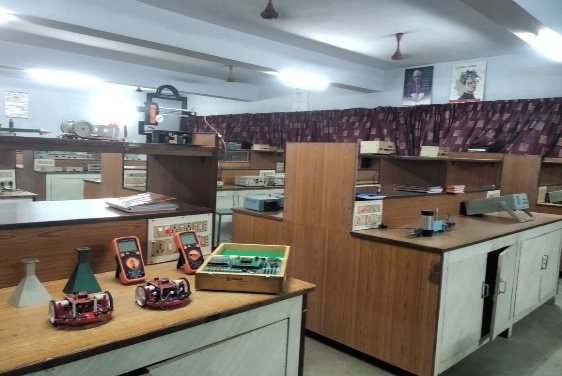
Robertics Lab
Laboratories
| Lab Name | Available area (m2) |
|---|---|
| Circuits & Devices Lab | 160 |
| Microprocessor & Microcontroller Lab | 160 |
| RF & Microwave Lab | 160 |
| DSP & VLSI Lab | 120 |
| Linear Integrated Circuits Lab | 120 |
| Digital Electronics Lab | 120 |

Research facilities
Research Laboratory-I
- XILINX Spartan XC3S250 FPGA
- Universal Programmer for DSP
- DSP 5013 Development System
- TMS320C6713 DSP Processor Kit
- Model sim software, Xilinx software
- ARM-7 Development Board with RTOS
- Wireless modules using Zigbee
- Research Laboratory-II
- Antenna measurement System Unit
- Oscillator set
- Spectrum Analyzer
- AM & FM Signal generator
Department Library
Volumes
- 300 Text Books
- 15 Lab Manuals
- 70 Student Project Reports
- 25 Question Banks
- 56 Student Project CDs
- 35 Project Kits
- NPTEL Lectures CDs
Along with the Central library of the University, the ECE department has got separate library, where various different subject books of ECE are placed. The Dept Faculties, Staff and Students can make use of this library.
Vision & Mission
Vision To become a centre of excellence and to produce high quality, self motivated, creative and ethical engineers and technologists, contributing effectively to Society and Science education. Mission
- To impart high quality Electronics and communication Engineering education and professional ethics to students
- To adopt the best pedagogical methods in order to maximize knowledge transfer
- To have adequate mechanisms to enhance understanding of implementation of theoretical concepts in practical Scenarios
- To carry out high quality of research leading to the creation of knowledge and of intellectual property
- To provide the best facility, infrastructure and environment to its students researchers and faculty members ,creating an ambience conducive for excellence in technical education and Research.
- PO1:Engineering knowledge: Apply the knowledge of mathematics, science, engineering fundamentals and an engineering specialization to the solution of complex engineering problems.
- PO2: Problem analysis: Identify, formulate, review research literature, and analyze complex engineering problems reaching substantiated conclusions using first principles of mathematics, natural sciences, and engineering sciences.
- PO3: Design/development of solutions: Design solutions for complex engineering problems anddesignsystemcomponentsorprocessesthatmeetthespecifiedneedswithappropriateconsiderationforthepublichealthandsafety,and the cultural, societal and environmental considerations.
- PO4: Conduct investigations of complex problems: Use research-based knowledge and research methods including design of experiments, analysis and interpretation of data, and synthesis of the information to provide valid conclusions.
- PO5: Modern tool usage: Create, select, and apply appropriate techniques, resources, and modern engineering and IT tools including prediction and modeling to complex engineering activities with an understanding of the limitations.
- PO6: The engineer and society: Apply reasoning informed by the contextual knowledge to assess societal, health, safety, legal and cultural issues and the consequent responsibilities relevant to the professional engineering practice.
- PO7: Environment and sustainability: Understand the impact of the professional engineering solutions in societal and environmental contexts, and demonstrate the knowledge of, and need for sustainable development.
- PO8: Ethics: Apply ethical principles and commit to professional ethics and responsibilities and norms of the engineering practice.
- PO9:Individual and teamwork: Function effectively as an individual ,and as a member or leader in diverse teams and in multidisciplinary settings.
- PO10: Communication: Communicate effectively on complex engineering activities with the engineering community and with society at large, such as, being able to comprehend and write effective reports and design documentation, make effective presentations, and give and receive clear instructions.
- PO11: Project management and finance: Demonstrate knowledge and understanding of the engineering and management principles and apply these to one’s own work, as a member and leader in a team, to manage projects and in multidisciplinary environments.
- PO12:Life long learning: Recognize the need for and have the preparation and ability to engage in independent and life-long learning in the broadest context of technological change.
| PEO1: | To enable graduates to pursue research, or have a successful career in academia or industries associated with Electronics and Communication Engineering, or as entrepreneurs. | |
| PEO2: | To provide students with strong foundational concepts and also advanced techniques and tools in order to enable them to build solutions or systems of varying complexity. | |
| PEO3: | To prepare students to critically analyze existing literature in an area of specialization and ethically develop innovative and research-oriented methodologies to solve the problems identified. | |
| PSO1: | To analyze, design and develop solutions by applying foundational concepts of Electronics and Communication Engineering |
| PSO2: | To adapt the emerging information and communication technologies to innovate ideas and solutions to existing/novel problems. |