


About The Department
ABOUT THE DEPARTMENT
The department of Biotechnology was started in the year 2016 with objectives of promoting quality and values based education by motivating the practical skills of students and create awareness on the recent advances in Biotechnology and research fields worldwide.
The Bio-technology program will tackle core subjects to ensure that they receive a solid grounding in fundamentals. Students will then specialize in the final year, making their choice from a wide range of options and research projects. Our biotechnology courses contain topics covering all aspects of the areas of biotechnology. The department regularly coordinates workshops, seminars and guest lectures by eminent resource person, organizes industrial visits to Industrial and Research institutes to benefits students with an exposure in research areas. Experienced Faculty members to mentor the students for customized career focus towards Employability, Entrepreneurship and Higher studies.

Dr. K. AMALA, M.Sc., M.Phil, Ph.D. PGDCA
Asst. Prof. & Head, Department of Biotechnology,
Dr. K. AMALA, an easily approachable, passionate and dedicated researcher and teacher. She is having 8 years of experience in herbal drug research. Served as Senior Research Fellow and Research Associate in various AYUSH and ICMR projects in the Department of Pharmacognosy (NABL accreditation laboratory) at Captain Srinivasa MurtI Drug Research Institute for Ayurveda, Anna Hospital campus, Arumbakkam, Chennai – 600 106. [CCRAS, Union of Health and family Welfare, AYUSH, Govt.of India]. Also she is having 8 years of experience in teaching as Assistant professor. She went on to complete her Ph.D degree from University of Madras, Master of Philosophy from Periyar University, Master of Science from Pachaiyappa’s College, Chennai, Bachelor of Science from Queen Mary’s College, Chennai.
Research being a key interest, Dr. K. AMALA serves as Research Guide for Ph.D.Scholars. Her research interest includes Pharmacognosy, Phytochemistry, Pharmacology, Medicinal plants identification, Antimicrobial and Antioxidant. Under her guidance 2 candidate has been awarded doctoral degree, 1 has been submitted thesis and presently guiding 4 scholar. She has published 25 research articles in various National and International Journals. To her credit she has published 2 patent.
BOS MEMBERS
| S. No | Name | Designation | Member |
| 1 | Dr. K. Amala | Asst. Professor & Head, SPIHER | Chairman |
| 2 | Dr. S. Chandra | Professor, SPIHER | Internal Member |
| 3 | Mrs. P. Yogarajalakshmi | Assistant professor, SPIHER | Internal Member |
| 4 | Dr. D. Saravanan | Assistant professor, Department of Biochemistry D.G. vaishnav College, Arumbakkam, Chennai-600106 | External Member |
| 5 | Dr.S. Jamuna | Director Affyclone laboratories Pvt Ltd,Chrompet, Chennai-44 | External Member |
| 6 | Mr. K. Tharun Raj | Allysmart Business Process Solutions India Pvt Ltd, Perungudi, Chennai- 96 | Alumini |
B.Sc – Bio Technology
A candidate who have passed Higher Secondary Examination with Biology, Botany, Zoology, Biochemistry and Microbiology as main subjects of study or equivalent thereto are eligible for admission to B.Sc. Programme in Biotechnology. The languages offered are Tamil, French, Hindi and Telugu. The curriculum is enriched with the latest topics of fundamentals of Biotechnology, elective subjects and value added courses are added with the reasonable credits. Equal importance is given to the practical classes. Microbiology, Biochemistry and Chemistry are offered as the allied subjects in the I year and II year respectively.
Curriculum and Syllabus
M.Sc. – Bio Technology
A candidate who have passed B.ScBiotech/ Biology/ Botany/ Zoology/ Biochemistry/ Microbiology/ Agriculture/ Life science degree examination accepted as equivalent thereto are eligible for admission to two year M.Sc. Programme in Biotechnology. This programme comprises of 4 semesters. Each semester has core and program and Institute elective subjects and the students are given freedom to choose their electives from the list of electives offered.
Curriculum and Syllabus
Ph.D – Biotechnology
Facilities
RESEARCH FACILITIES
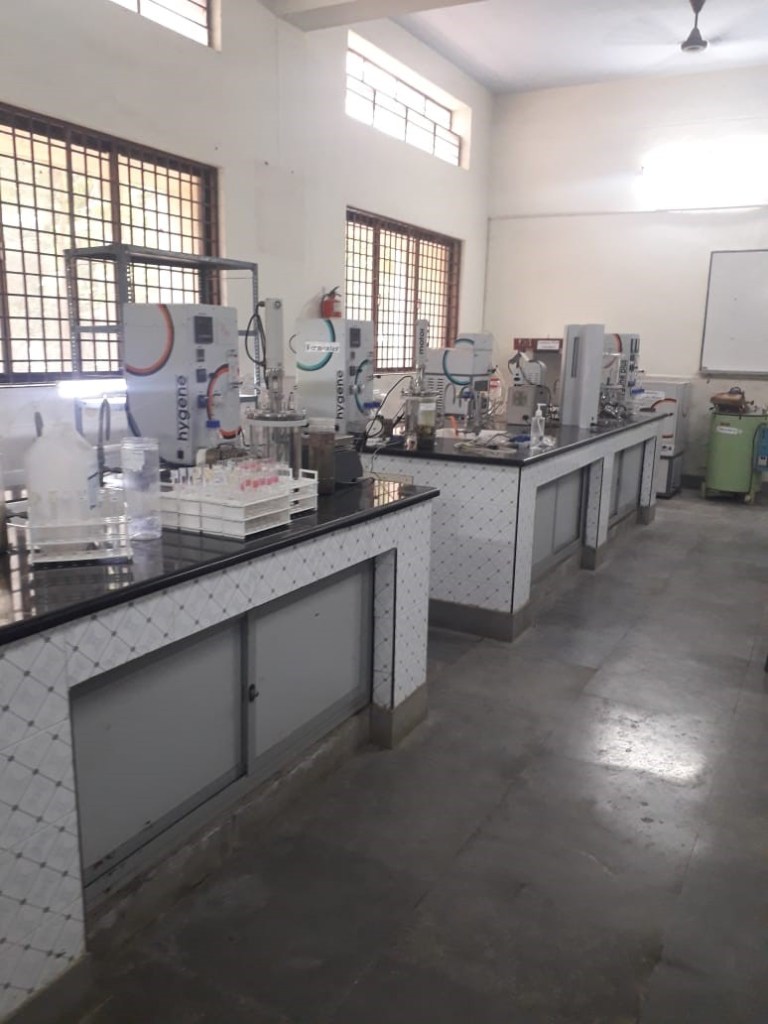
In the department of Biotechnology, modern instruments are available for the development of research. The separate labs are available for the research aspects of Biotechnology. The following Labs are available for the purpose of research.
Biotechnology Lab
Biochemistry techniques lab
Microbiology lab
Immunology Lab
Fermenter room


LAB FACILITIES
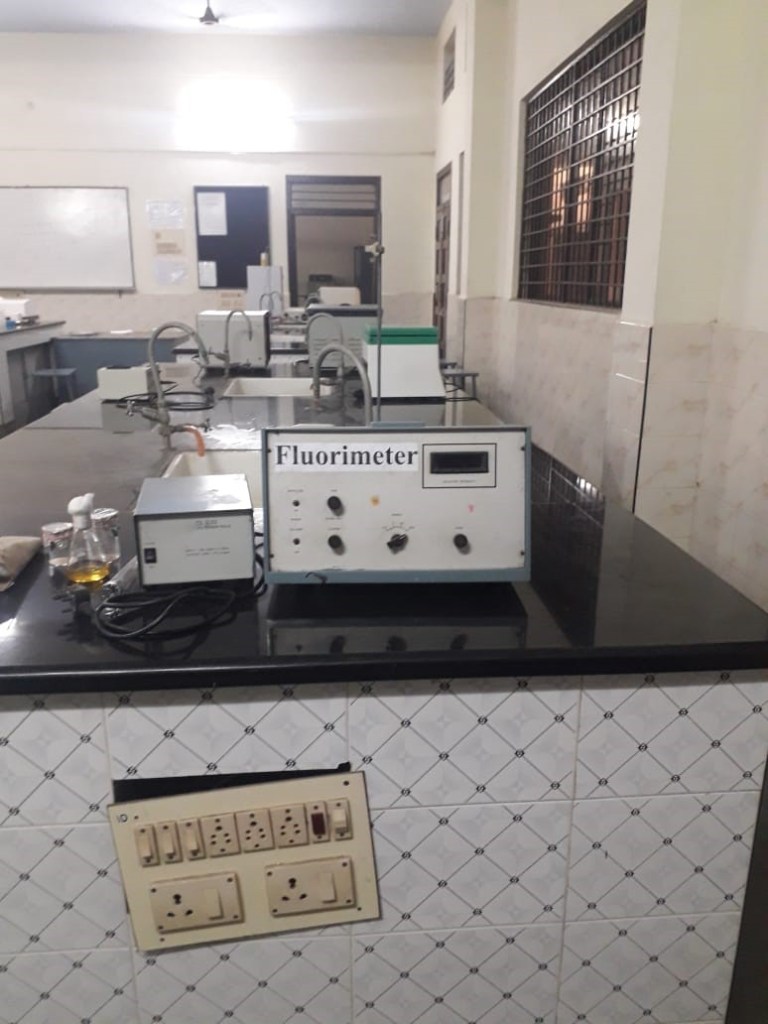
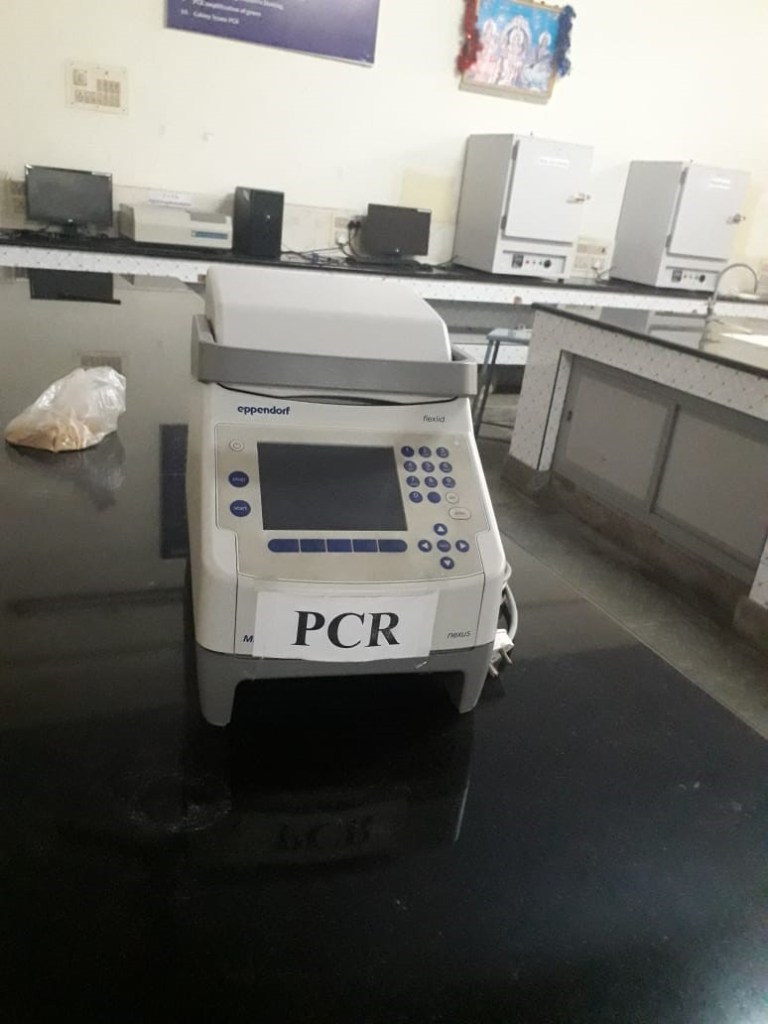
Biotechnology Laboratory is spacious and well equipped with various sophisticated instruments. The following are the instruments available for the purpose of both students practical as well as for their projects.
- Electrophoresis apparatus
- PCR
- UV visible spectrophotometer
- Autoclave
- Incubator
- Incubator shaker
- Laminar flow chamber
- Cooling centrifuge
- Micro centrifuge
- Hot air oven
- UV trans eliminator
- Deep freezer
- Microwave oven
- Light microscope
- Calorimeter
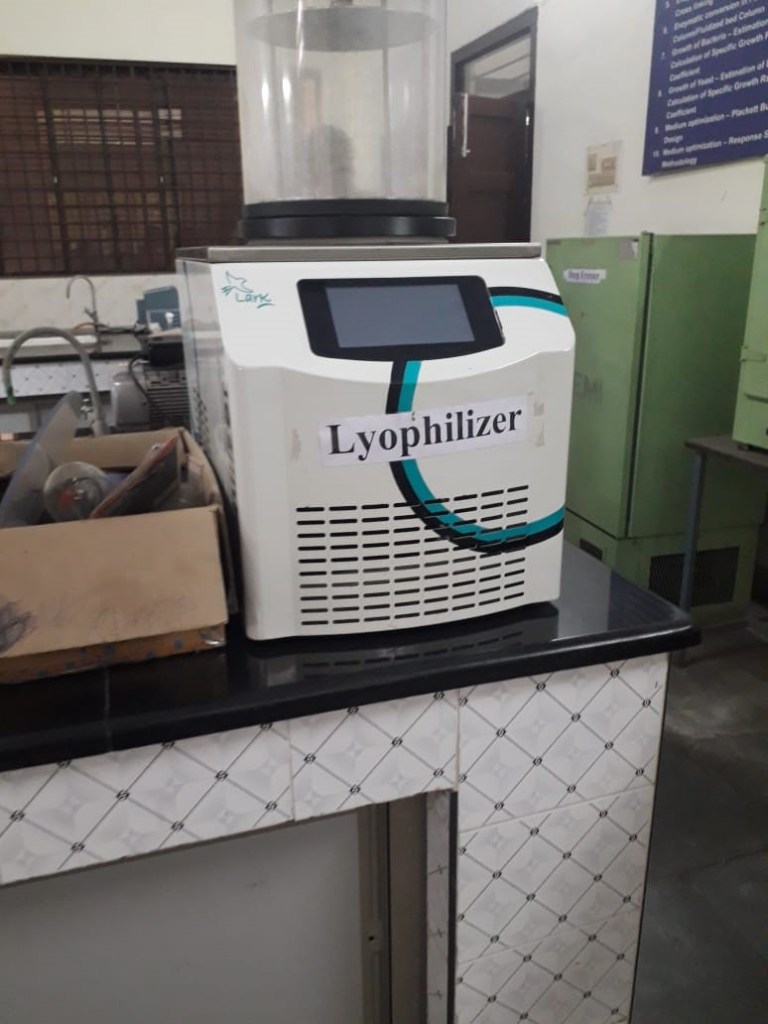
Activities
ACTIVITIES:
Research Activities
Faculty are dynamically involved in guiding students apart from their regular curriculum teaching, and constantly pursuing extramural funding from national and international funding resources such as the DST, DBT, ICMR, DRDO, TNSCST and other major funding agency.
Research Area
- Biotechnology
- Environmental Toxicology
- Applied Entomology
- Chemical characterization of bio-rational derivatives
- Antimicrobial Resistance
- Medical Entomology
- Integrated Pest Management
Funded Projects
| S.No. | Funding agency | Title | Budget in Lakhs | Status |
| 1 | DST August 2018 ECR/2018/000552 | A cellular and molecular investigation of dynamicphytochemicals(andrographolide and plumbagin) in tobaccocutwormSpodopteralitura Fab.And their non toxicity against beneficial earthworm | 26.69 | Approved |
| 2 | TNSCST | Multi-potency of dynamic phytochemicals quercetin and andrographolide against medically challenging dengue mosquito vector Aedesaegypti Linn. and agriculture pest Spodopteralitura Fab. And their non-toxicity against beneficial species necessary | 4.5 | Applied |
| 3 | ICMR | Expression Pattern Of Salivary Gland Proteins In Different Strains Of AedesAegypti (Lin.) Exposed With Silicon Based Nano-Formulation (Sinps) Of Dynamic Phyto-Chemicals. | 22.25 | Applied |
Research Supervisors:
- Dr. P. Vasantha-Srinivasan, M.Sc., Ph.D., PDF.
Assistant Professor/HOD,
Principal Investigator (DST-SERB)
Specialization: Bio-pesticides and Toxicology; Applied Entomology
- Dr. K. Amala, M.Sc., M.Phil., Ph.D., Assistant Professor Specialization: Ethno-pharmacology, Botany.
- Joint collaborations with S. Senthil-Nathan, ManonmaniamSundaranar University for collaborative research and 3 international journals has been published.
DEPARTMENT PUBLICATIONS
- Vasantha-Srinivasan et al. (2018) A novel herbal product based on Piper betle and Sphaeranthusindicus essential oils: Toxicity, repellent activity and impact on detoxifying enzymes GST and CYP450 of Aedesaegypti Liston (Diptera: Culicidae). J. Asia Pac. Entomol. 21, 1466-1472 (Impact Factor 0.980).
- Vasantha-Srinivasan et al. (2019) Aspergillus flavus (Link) toxins reduces the fitness of dengue vector Aedesaegypti (Linn.) and their non-target toxicity against aquatic predator. Microb. Pathogen. 128, 281-287 (Impact Factor: 2.08).
- Ponsankar, A., Senthil-Nathan, S. Vasantha-Srinivasan et al. Toxicity and developmental effect of cucurbitacin E from Citrulluscolocynthis L. (Cucurbitales: Cucurbitaceae) against Spodopteralitura Fab. and a non-target earthworm EiseniafetidaSavigny. Environ SciPollut Res (2019). https://doi.org/10.1007/s11356-019-04438-1 (Impact Factor: 2.38).
Research Laboratory:
- Insect Toxicology laboratory was established with the funding supported under the sanctioned project from DST-ECRA (Early career research award DST ECR/2018/000552).
Vision & Mission
DEPARTMENT OF BIOTECHNOLOGY
Vision
To produce higher caliber Biotechnologists to attain new heights in the different areas of biotechnology as per industrial needs and to provide leaders in the field of Biotechnology.
Mission
- To progress the department to attain center of excellence in Biotechnology.
- To provide quality education and training to the students with strong foundational concepts and techniques in Biotechnology to face future challenges.
- To provide skill development activities in the promising areas of Biotechnology
- To providing best Undergraduate, Postgraduate, Doctoral programs and Research and Development activities within a decade.
PROGRAM EDUCATIONAL OBJECTIVES (PEOs)
PEO 1: Ability to apply knowledge of Biology, Science and Technology
PEO 2: Ability to communicate effectively with biotechnologists, other professional and community at large. The ability to explain the impact of engineering solutions in societal, cultural, global and environmental context.
PEO 3: Contribute towards technological development through academic Research and Industrial practices.
PEO 4: To produce research oriented Biotechnology graduates who will be employable in academic/Industry sponsored research and also who will be pursuing higher studies.
PEO 5: Ability to get employment in Biotechnology and related Industry and also to set up an Industry.
PROGRAM OUTCOMES (POs):
PO 1: Critical Thinking:
Take informed actions after identifying the assumptions that frame our thinking and actions, checking out the degree to which these assumptions are accurate and valid, and looking at our ideas and decisions (intellectual, organizational, and personal) from different perspectives.
PO 2:Effective Communication:
Speak, read, write and listen clearly in person and through electronic media in English and in one Indian language, and make meaning of the world by connecting people, ideas, books, media and technology
PO 3:Social Interaction:
Elicit views of others, mediate disagreements and help reach conclusions in group settings.
PO 4:Effective Citizenship:
Demonstrate empathetic social concern and equity centred national development, and the ability to act with an informed awareness of issues and participate in civic life through volunteering.
PO 5:Ethics:
Recognize different value systems including your own, understand the moral dimensions of your decisions, and accept responsibility for them.
PO 6:Environment and Sustainability:
Understand the issues of environmental contexts and sustainable development.
PO 7:Self-directed and Life-long Learning:
Acquire the ability to engage in independent and life-long learning in the broadest
context socio-technological changes.
PO 8:Modern tool usage:
Create, select, and apply appropriate techniques, resources, and modern engineering and IT tools including prediction and modelling to complex engineering activities with an understanding of the limitations.
PROGRAM SPECIFIC OUTCOMES (PSOs)
PSO 1: To produce graduates as an outstanding researchers or eminent scientist in the field of biotechnology and to generate unique products for social need with concern ethical statute.
PSO 2: To sort the students to be an efficient entrepreneur to twitch biotechnology companies and industries.
PSO 3: To uplift the graduate's more specifically in to research-oriented Biotechnologist and will be employable in academic/Industry sponsored research and also who will be pursuing higher research studies.