Electrical and Electronics Engineering
- Home
- Academics
About Department of
Electrical and Electronics Engineering
The Department of Electrical and Electronics Engineering (EEE) was established in 1993 with AICTE approval and an intake of 60 students. It offers a B.E. in EEE and an M.E. in Power Electronics and Drives (since 2004-2005). EEE covers both electrical and electronic fields, offering vast career opportunities in public and private sectors. Graduates secure high-paying jobs in power industries, electrical machine industries, and leading tech firms. Methodist provides state-of-the-art labs, expert faculty, and industry exposure through workshops, seminars, and industrial visits. The department conducts national and international conferences and guest lectures on emerging technologies. Students benefit from campus placements by top software and hardware companies.
The curriculum is designed to be industry-oriented and prepare students for the evolving job market. High-speed internet and modern computer facilities support learning and research. Methodist ensures quality education and a strong foundation for aspiring engineers.
(2023-2024)
About Department of
Computer Science Engineering
The Department of Computer Science and Engineering was started in the year 1993 with an initial intake of 60 students in the under graduate program. The department strives to achieve its vision by its highly qualified and dedicated team of faculty. To promote higher education, M.E (Computer Science and Engineering) and Ph.D., was started in the year 2008.
Computer Science and Engineering is leading the way in revolutionizing and making the current digital world a reality. The department is equipped with state-of-art computing facilities to impart practical exposure to the students in the recent advancements in the field of information technology.
Placement Records
Student Placed (2023-2024)
Vision
Mission
- To prepare engineering graduates with deep understanding of fundamentals of Electrical Engineering.
- To prepare professionals with good technical skills, positive attitude and ethical values.
- To collaborate with industry, research organisations and academia to encourage creativity and innovation.
- To provide them a platform for developing new products and systems that can help industry and society as a whole.
Programmes
Electrical and Electronics Engineering
POs,PSOs and PEOs
Programme Educational Objectives (PEOs)
PEO1: To enable the graduates to be successful in their career in industries, academia and other related sectors associated with Computer Science and Engineering, or as entrepreneurs.
PEO2: To educate the graduates with fundamental concepts, advanced techniques and modern tools that will enable them to design, develop and deploy solutions for real world problems and build systems of varying complexity.
PEO3: To prepare the students to review the existing literature in the area of specialization, provide innovative solutions scientifically and ethically by adapting to the new technology and communicate effectively in deliberating their duties as an individual or as a team.
Programme Outcomes (POs)
Engineering Graduates will be able to:
PO1: Engineering knowledge: Apply the knowledge of mathematics, science, engineering fundamentals and an engineering specialization to the solution of complex engineering problems.
PO2: Problem analysis: Identify, formulate, review research literature, and analyze complex engineering problems reaching substantiated conclusions using first principles of mathematics, natural sciences, and engineering sciences.
PO3: Design/development of solutions: Design solutions for complex engineering problems and design system components or processes that meet the specified needs with appropriate consideration for the public health and safety, and the cultural, societal, and environmental considerations.
PO4: Conduct investigations of complex problems: Use research-based knowledge and research methods including design of experiments, analysis and interpretation of data, and synthesis of the information to provide valid conclusions.
PO5: Modern tool usage: Create, select, and apply appropriate techniques, resources, and modern engineering and IT tools including prediction and modeling to complex engineering activities with an understanding of the limitations.
PO6: The engineer and society: Apply reasoning informed by the contextual knowledge to assess societal, health, safety, legal and cultural issues and the consequent responsibilities relevant to the professional engineering practice.
PO7: Environment and sustainability: Understand the impact of the professional engineering solutions in societal and environmental contexts, and demonstrate the knowledge of, and need for sustainable development.
PO8: Ethics: Apply ethical principles and commit to professional ethics and responsibilities and norms of the engineering practice.
PO9: Individual and team work: Function effectively as an individual, and as a member or leader in diverse teams, and in multidisciplinary settings.
The Department of Computer Science and Engineering has created an rigorous teaching and learning experience through industry driven Curriculum.
PO10: Communication: Communicate effectively on complex engineering activities with the engineering community and with society at large, such as, being able to comprehend and write effective reports and design documentation, make effective presentations, and give and receive clear instructions.
PO11: Project management and finance: Demonstrate knowledge and understanding of the engineering and management principles and apply these to one‘s own work, as a member and leader in a team, to manage projects and in multidisciplinary environments.
PO12: Life-long learning: Recognize the need for, and have the preparation and ability to engage in independent and life-long learning in the broadest context of technological change.

Programme Specific Outcomes(PSOs)
PSO 1: To effectively analyze, design and develop solutions by applying fundamental and advanced concepts in the domain of computer science and engineering.
PSO 2: To adapt the emerging computer science and IT enabled technologies to develop novel ideas and solutions to existing or new problems.
PSO3: To motivate for continuous self-learning in engineering practice and pursue research in advanced areas of Electrical Engineering in order to offer engineering services to the society, ethically.
Head of the Department
Dr. B. SHANTHINI M.E., Ph.D.
Professor & Head,
Department of Computer Science and Engineering
Head of the Department
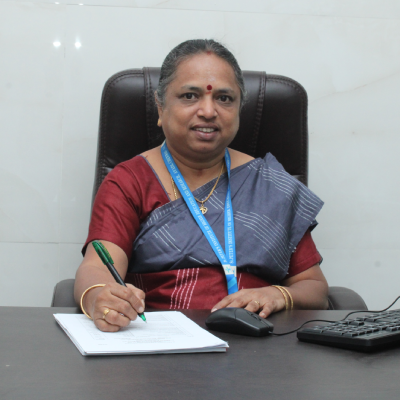
DR. R. RANI HEMAMALINI, B.E., MTECH., PH.D.
Professor & Head,
Department of Electrical and Electronics Engineering
Staffs
| Faculty Name | Designation | Qualification |
|---|---|---|
| Dr. R. Rani Hemamalini | IQAC Director | B.E, M.E, Ph.D |
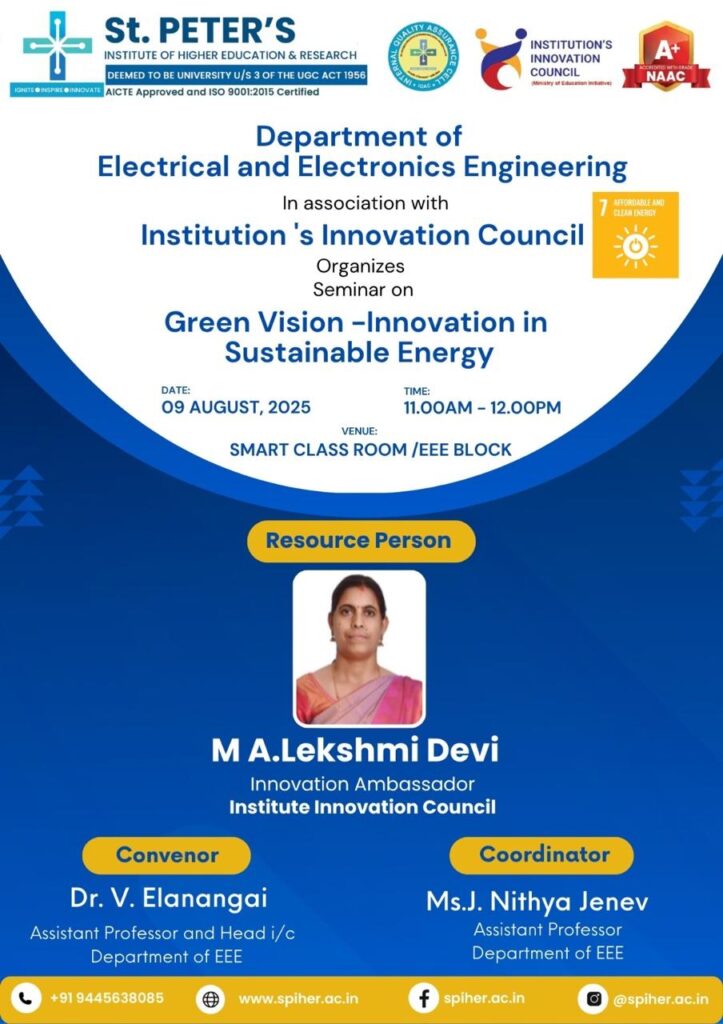
| Dr. V. Elanangai | HoD Incharge/Assoc.Prof | B.E, M.Tech, Ph.D |
| Dr. K. Balaji | Assoc. Prof. | B.E, M.E, Ph.D |
| Mr. K. Matthew | Asst. Prof. | B.E, M.E |
| Dr. J. Arunkumar | Assoc. Prof. | B.E, M.E, Ph.D |
| Ms. M. A. Lekshmi Devi | Asst. Prof. | B.E, M.E |
| Ms. M. Nithya | Asst. Prof. | B.E, M.E |
Dr. R. Rani Hemamalini
IQAC Director
B.E, M.E, Ph.D
Dr. V. Elanangai
HoD Incharge/Associate Professor
B.E, M.E, Ph.D
Dr. K. Balaji
Associate Professor
B.E, M.E, Ph.D
Mr. K. Matthew
Associate Professor
B.E, M.E, Ph.D
Dr. J. Arunkumar
Associate Professor
B.E, M.E, Ph.D
Ms. M. A. Lekshmi Devi
Assistant Professor
B.E, M.E
Ms. M. Nithya
Assistant Professor
B.E, M.E
News & Events
Facilities
Experience Excellence in Infrastructure
Structural Engineering Laboratory
Survey Laboratory
Civil Computer Laboratory
Transportation Engineering Laboratory
Unlocking Opportunities
Career Success with SPIHER Placements
Raghul
Computer Science Engineering
Lorem ipsum dolor sit amet, consectetur adipiscing elit. Ut elit tellus, luctus nec ullamcorper mattis, pulvinar dapibus leo.
2023 – 2024 | 5.5 LPA
Raghul
Computer Science Engineering
Lorem ipsum dolor sit amet, consectetur adipiscing elit. Ut elit tellus, luctus nec ullamcorper mattis, pulvinar dapibus leo.
2023 – 2024 | 5.5 LPA
Raghul
Computer Science Engineering
Lorem ipsum dolor sit amet, consectetur adipiscing elit. Ut elit tellus, luctus nec ullamcorper mattis, pulvinar dapibus leo.
2023 – 2024 | 5.5 LPA
Raghul
Computer Science Engineering
Lorem ipsum dolor sit amet, consectetur adipiscing elit. Ut elit tellus, luctus nec ullamcorper mattis, pulvinar dapibus leo.
2023 – 2024 | 5.5 LPA
Highest Package