Clean Water and Sanitation
- Home
- Clean Water and Sanitation
Clean Water and Sanitation
Introduction
Sustainable Development Goal 6 (SDG 6), which focuses on clean water and sanitation, is essential for higher education institutions seeking to foster sustainable practices on their campuses and within their communities. Clean water access, efficient water management, and effective sanitation systems are crucial for ensuring the health, well-being, and productivity of students, faculty, and staff. By adopting water-efficient technologies, rainwater harvesting, and wastewater recycling, universities can reduce their environmental impact and operational costs, while serving as models for sustainable water management.
Read More
In accordance with these sustainable development objective “Clean water and Sanitation,” St. Peter’s Institute of Higher Education and Research (SPIHER) is fully committed to making it possible for students and residents of the community to access basic services related to water, sanitation, and hygiene. Over — acres, the Institute is home to approximately 7,000 people who participate in a wide range of activities. Institute takes keen interest in fostering students’ holistic growth into responsible citizens of the future. In this context, the best management of facilities for water and sanitation is of the utmost importance for creating a healthy future. The Sharda University’s school buildings, hostels, and hospitals are all equipped with RO systems and have adequate sanitation facilities. In the hostel, mess, and Sharda hospital, hygiene guidelines are strictly followed. In all of its possible academic and non-academic operations, the Institute has initiated the promotion of environmentally friendly methods. The university’s campus-wide strategy for environmentally friendly, long-term, and short-term financial benefits is centered on environmentally conscious activities. In laboratories, greener and safer methods are used. Memorandum of Understanding signed with External Agencies for disposing solid waste and E-waste collected in the campus. The university’s rainwater harvesting system ensures water recycling and reuse. For treating effluents, there is a STP with a capacity of 1 lakh litres; The sludge is used to make manure, and the recycled water is used for horticulture and the flushing system, Raw bore well water from campus is fed into the RO plant of capacity 500 litre/hr and the impure water from RO Plant after treatment is used for gardening in the campus
1.Solid Waste Management
- Trash cans are placed in prominent places in the campus to collect wet waste and dry waste separately.
- MoU is signed with external agencies to dispose the solid waste like paper, glass and metals periodically in a safe manner
- The biodegradable waste that is generated from the hostel is segregated and the wastes are dumped in biogas decomposer tank for fermentation process to produce biogas, which is used for cooking purpose in the hostel.
- Sanitary napkin incinerators are installed in ladies toilet in various locations and in the hostel to dispose the napkin waste in a safe manner.
2. LIQUID WASTE MANAGEMENT
- A sewage treatment plant of capacity 1 Lakh litres has been installed for the hostels.
- Septic tanks are provided for all the buildings for the disposal of sewage.
- Raw bore well water from campus is fed into the RO plant of capacity 500 litre/hr and the impure water from RO Plant after treatment is used for gardening in the campus.
- Liquid wastes are more difficult to collect and remove from an environment than solid wastes
- At SPIHER, we have a sewage treatment facility that is kept up to date to handle and dispose of liquid waste properly.
3. BIOMEDICAL WASTE MANAGEMENT
- Autoclave has been used for the following biomedical, microbiological and Biotechnological purposes
- After the usage of those bacterial species, the corresponding petri plates have been decontaminated or bacterial discarded by the process of Sterilization at 120ºC for 20-30 min.
- The Autoclave is placed in the isolated and ventilated setup of the laboratory of Biotechnology and Microbiology to remove the unnecessary bacteria and virus associated in the experimental setup
- Incinerator is used to dispose biological waste like cotton, bandage
4.E-WASTE MANAGEMENT
- E-wastes are collected and handed over to external agencies to recycle the materials.
- The awareness programs are organized in the institution with a view to impart the E-waste management techniques
5.WASTE RECYCLING SYSTEM
- The fundamental principle of the institution in waste recycling system is the implementation of the 3R’s-Reduce, Reuse, and Recycle.
- Treated water from STP and RO plant are used for gardening purpose
- Food waste, plant waste are fermented in biogas plant and the fuel thus produced are used as fuel in kitchen
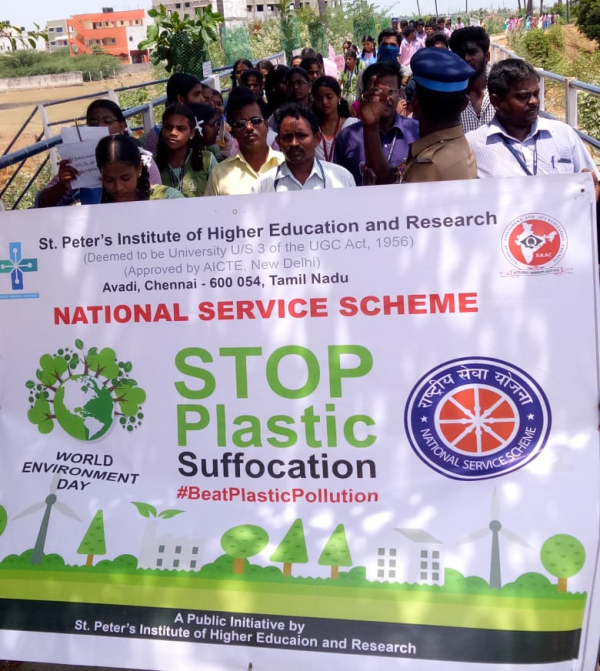
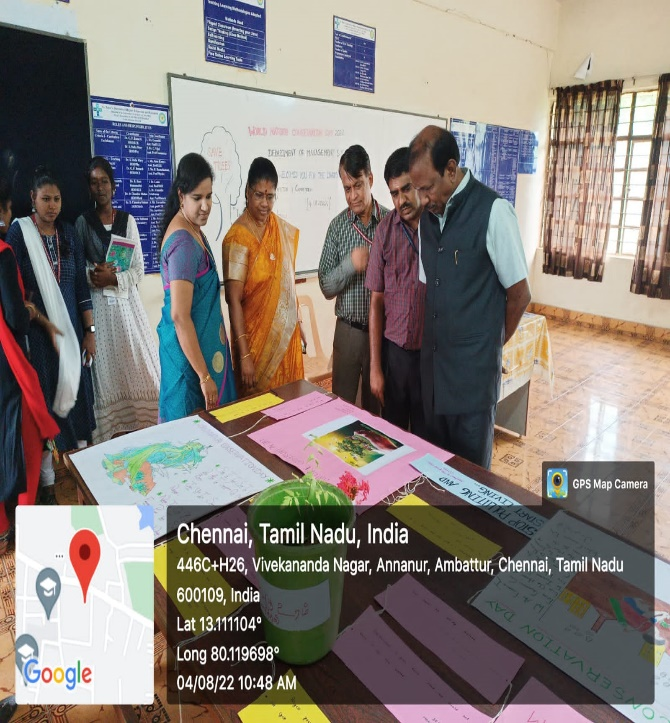
6. ACTIVITIES ON WASTE MANAGEMENT
- Autoclave has been used for the following biomedical, microbiological and Biotechnological purposes
- After the usage of those bacterial species, the corresponding petri plates have been decontaminated or bacterial discarded by the process of Sterilization at 120ºC for 20-30 min.
- The Autoclave is placed in the isolated and ventilated setup of the laboratory of Biotechnology and Microbiology to remove the unnecessary bacteria and virus associated in the experimental setup
- Incinerator is used to dispose biological waste like cotton, bandage
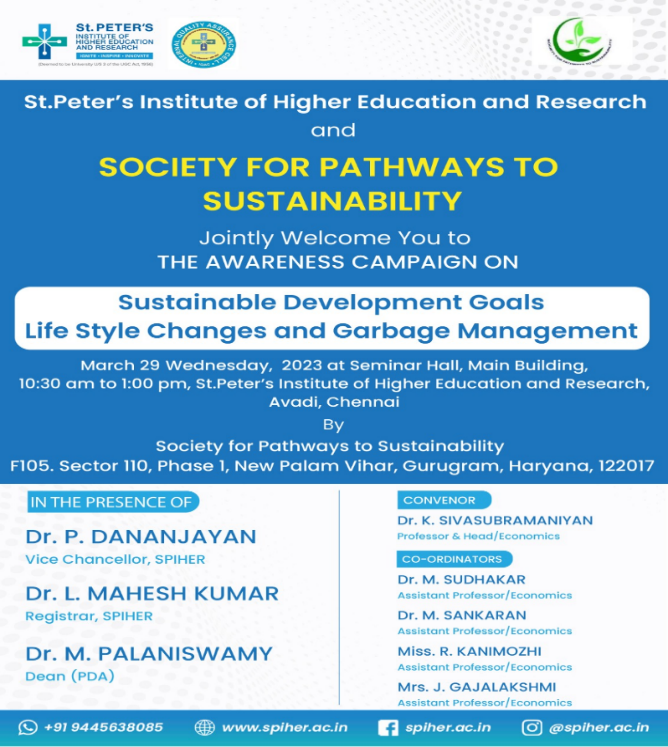
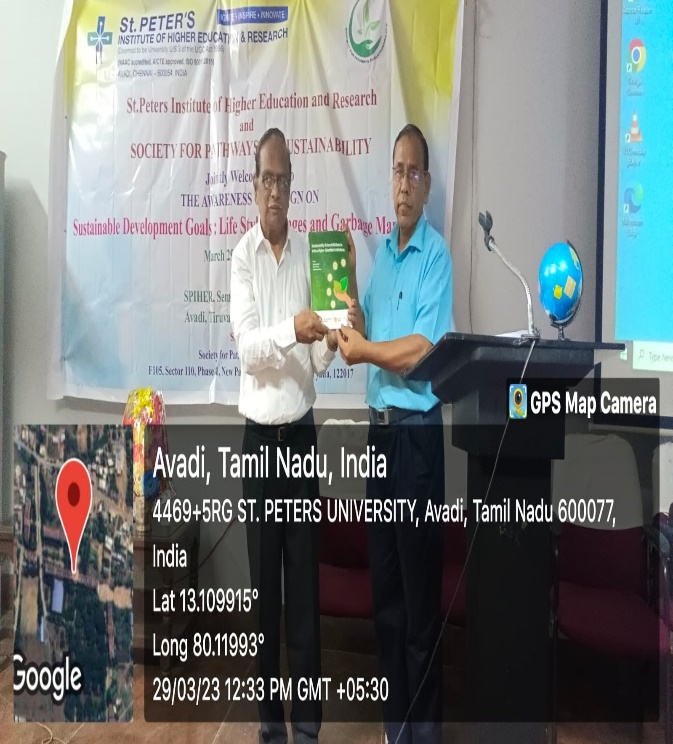
7. Awareness Campaign on Garbage Management
- Autoclave has been used for the following biomedical, microbiological and Biotechnological purposes
- After the usage of those bacterial species, the corresponding petri plates have been decontaminated or bacterial discarded by the process of Sterilization at 120ºC for 20-30 min.
- The Autoclave is placed in the isolated and ventilated setup of the laboratory of Biotechnology and Microbiology to remove the unnecessary bacteria and virus associated in the experimental setup
- Incinerator is used to dispose biological waste like cotton, bandage